| Mayhem
of the
Antihookupites
3/5/07
It happened
again
this morning. No,
not the dream about
going to Manderley
(that was last night), and not passing that one dude on the stair (that
was
yesterday). This
morning, over a banana and muffin (hey, my breakfast is a double entendre!), I once
again
saw something on a daytime pseudo-news show that pissed me off so much I
had to do an essay about it. Did you just give the
person
sitting next to you 10-1 odds
that it was about sex? You
win. Also, why are you and another person simultaneously reading
an article on the same computer and betting on it paragraph by
paragraph? That's weird. The story this time was
an
exposé of sorts about “hooking
up” — which, as any young person will tell you, is
the term that replaced “making
out” sometime in the early ’90s, or, as apparently
any old person will tell
you, is a terrible new phenomenon that is certainly not exactly the
same thing they did when they were kids, and which needs to be shit-fitted
out of
existence before it does irreparable damage to the self-esteem of the
space-time continuum.
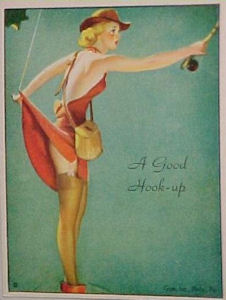
The
first
pre-commercial
lead-in was “do
casual hookups scar
young women for life?”
Okay,
no reason to be enraged so far.
After all, maybe
they’ll say “no, of course
not,” right?
That
would be fine. The second teaser
reestablished
that “today’s young women”
are “hooking up,” and then asked
“…but
does it doom them from ever finding true love?” What
the fuck? Yes, it dooms
them from ever finding true
love…
because it prompts a sinister wizard to put a curse on them. WHAT KIND OF
LANGUAGE IS
THAT FOR A GROWN-UP
TO USE?! In the last teaser,
despite the
fact that it was clear by
now they were talking about college students, they changed it to
“what
are the consequences when your child
engages in casual sex?”
So
this is a scaring-parents
thing? Scaring
parents with the
fact that their
22-year-old children might be having sex?
OF
COURSE YOUR 22-YEAR-OLD CHILDREN ARE HAVING SEX! DO YOU THINK
THEY’RE RETARDED? YOU
WOULD HONESTLY BE HAPPY IF YOUR CHILD
WERE RETARDED, WOULDN’T YOU, HYPOTHETICAL VIEWER? But I try not to get
too angry
before the segment even starts — or I would
try, if I were ever wrong about where it’s going.
The
panel consisted of the
show’s host plus
two women who’ve each written new books on the
subject: Laura Sessions Stepp,
author of Unhooked:
How Young Women
Pursue Sex, Delay Love, and Lose at Both,
and Amber Madison,
author of Hooking
Up: A Girl’s
All-Out Guide to Sex
& Sexuality. When I saw that there
were two
guests, I assumed that one
was a Liberal and the other a Conservative.
After
the first one spoke, I said “Oh,
that must be the
Conservative.” Then
the other one spoke,
and I said “No, wait, that
must be
the Conservative.” Finally,
after one of
them had gone on about “empowerment,” and the other
had gone on about how “hooking up” is different from the “free
love” that “we” had in the
’60s, I
said “Holy Fuckface, Mother of Shit — they both
think they’re Liberals.” But the discussion
certainly
wasn’t liberal
by any
definition of the term that I’m willing to
countenance. It
seemed to be accepted a
priori that
girls don’t ever really
want casual sex, and the
panel proceeded directly to the
questions of why
girls are engaging
in activity that
they don’t really want to be engaging in, and, of course, how
this can all be stopped. It wasn’t
about not
wanting girls to get STDs, because STDs
weren’t mentioned (and this actually constituted the high
point
for me, insofar as it was
refreshing for once not
to hear an ansy
justifying their
rhetoric with surrogate arguments about STDs).
It
was just
about sex, and how
it’s bad — for
girls. One panelist alleged
that girls
only “hook up as a result of
being afraid of relationships.” Excuse me, but how is
this Liberal? Saying
that girls
can’t ever just be horny
like normal people, but always
have to be all about relationships? The
entire discussion was
framed in terms of empowerment
or
lack thereof — something
along the lines of “young women think hooking up is
empowering, but it really
isn’t” was said approximately 756 times.
Well,
no shit, it
isn’t empowering — but,
you know what else? It
doesn’t have to
be. Think about it:
do boys play video
games because it’s empowering? No. Boys
play
video games because it’s fun. And
so is fucking. The
only true empowerment
will come when women feel
free to act based on what they just
fucking feel like doing, same as boys,
rather than feeling as
if their
every action must constitute a political statement made on behalf of
their
entire gender. Wanting
to fuck isn’t a
consciously mapped-out political act; it’s just wanting to
fuck, because you’re
a mammal and you’re horny (cf. Gang, Bloodhound). There was plenty of
acknowledgement of — which is not to say insistence
upon — the reverse: that
boys
have emotions too; that boys want to get married too; etc. But
no acknowledgement of
the existence of
simple female horniness. Not
one — and I
listened for it very carefully.
Statistics like “3/4
of college students have hooked up by their senior year,”
“the
average college student hooks
up seven
times,” and “Over
88% of women have
had sex by age 24”
scrolled across the bottom of
the screen — is that
supposed to be shocking? Are
we supposed to react
by thinking that
something needs
to be done about
that? I mean, aside from something to help that poor 12% of
women who haven’t
even gotten laid by the age that Paul McCartney was when the Beatles
recorded Sgt.
Pepper and the age
that Keats was
when he wrote, you know, everything,
because then he fucking
died. You
heard it from the people who are trying to help you, girls: by
the time you are the age that some of the greatest creative minds in
history were when they created some of the greatest art in history, the
most important thing about you will still be whether or not you have
sex. I should probably stop
here
and mention that, after doing
further research about the panelists, it seems that Amber Madison is
actually
way cooler than Laura Sessions Stepp.
Madison’s
book is aimed at high-school girls, and is more like (much-needed) sex
advice
than finger-wagging (although some of the advice does include
“finger wagging,”
if you know what I mean). But
the fact
remains that I was surprised to find this out, because she
didn’t really come
off that way on the show. The
segment as
a whole was pretty unambiguously a juggernaut in the direction of
“girls should
not hook up because it is bad for them.”
So
if this isn’t
a statement
that Madison
would agree with — as it
does indeed seem that she wouldn’t, in all the other media I
could find about
her — then why did she allow herself to be pushed that way on
the air? Maybe the
producers were pushing the alarmist
angle, or maybe Stepp just did most of the talking. I don't remember, and I
don’t have the show on tape. I
realize that I could
actually read their
books if I wanted to learn more about the differences of opinion
between
Madison and Stepp, but this essay isn’t a review of their
books — it’s a reaction
to a segment on a TV show that featured them, and that segment was
indeed
beyond asinine.
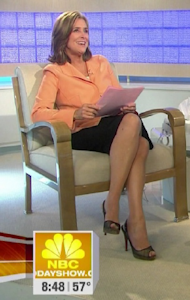
53-year-old
morning-show hosts can still
hook
up though, right? Because holy shit.
The
panel discussion
was
intercut with quick-edit footage of
college-aged women being asked questions about “hookup
culture” (i.e., culture at
all,
for anyone who isn’t old). I
wasn’t sure what to make of their
responses.
Whatever
the entirety of the
answers may have been, the footage was pared down to statements like
“yeah,
usually alcohol is a factor.” Okay: a)
you know what else “alcohol is a factor” in when
you’re in college? Fucking
everything.
And b)
as
a million
people have already pointed out until they were hoarse, girls have to
drink first even when they know
beforehand
that they want to
hook
up, so that they can use being drunk as an excuse to people who are
waiting to
call them sluts — many of whom are other girls. You
want to stop college girls from getting drunk before they have sex?
Tell the
ugly ones that they’re not allowed
to call the hot ones sluts anymore. Stepp
kept
insisting “I’m not against
sex; I’m for romance.” But
here’s the
thing: yes,
you are. If
you are
saying — or even coming close to
implying — that people should only be having sex with someone
they love, then you are
in fact
“against
sex.” That
is what “against sex” means,
no matter how much armchair-psychological
or lite-feminist language you couch it in. And another thing: I
thought
the anti-sex
feminists were the same
people as the “there
are no
differences
between men and women”
feminists — but
doesn’t their rhetoric presuppose way more
essentialist gender difference than
even the average man
these days
assumes to exist? Stepp
may have been
implying this more
than Madison,
but
both panelists were
pretty clearly
implying that all women inherently only truly
desire sexual activity within the confines of a traditional
“romantic”
relationship, and that any woman who says otherwise is only fooling
herself
because she’s been warped by that topsy-turvy villain
“society.” There’s an
already-infamous passage in Stepp’s book where
she suggests activities that young women can engage in besides hooking
up — and
you know what her #1 example is? Baking. I’m
not kidding: fucking baking. Way
to stick it to
“society.” I’d like to
return
to that bit about boys having emotions
too. Yes,
that’s true — boys do have
emotions. But, like
anyone else, boys
base these emotions partly on knowledge of which ones it is or
isn’t okay for
them to have. If a
male college student
likes a girl and she doesn’t like him back, or he’s
just having trouble getting
laid in general, he will not
forge
these setbacks into an anti-sex philosophy unless he lives in
an environment
where it’s an option for him to become a religious
Conservative. Short
of that, it is simply not
an option
for a boy to be against
sex. And
you know what this is,
for boys? That’s
right: empowering.
It
makes us work
harder, instead of just giving up. But a girl
who’s
suffered romantic disappointments isn’t
only given the
option of developing
an anti-sex philosophy — she feels pressure
to develop one, from women who are supposedly trying to empower
her. And this
is the real
“pressure.” Pressure
to like
sex comes from inside
your own body, and thus is not
actually
“pressure” at all. Being
against sex is an option that only the political right should be extending to people.
The
left has long since stopped extending it to boys, and the so-called
left needs
to stop extending it to girls. You
want
to empower
women? Then
for Fuck’s sake let them grow up.
That’s
how they
stop being girls. In closing, I’d like
to congratulate all readers who not
only caught the fact that the title of this essay was a reference to
the
classic Aqua
Teen Hunger Force
episode “Mayhem of the Mooninites,” but also
realized that I did this because
Artemis/Diana, pagan goddess of the Moon, was also the patroness of
virgins,
and hence women who are against sex are represented by the Moon. If
you figured that out,
you’re really,
really smart. Wanna fuck?

|
